Sustainable Finance in Asia Q2 2026 Update
The second quarter of 2026 confirmed that sustainable finance in Asia is entering a more implementation-focused stage. Across the region, the most important developments were not broad new slogans, but the strengthening of institutional frameworks already under construction: transition finance, taxonomy development, sustainability disclosure ecosystems, climate-related fiscal policy, and multilateral support for project pipelines and capital mobilisation. Asia’s sustainable finance agenda in Q2 2026 was therefore less about creating an entirely new paradigm and more about making existing frameworks credible, regionally relevant, and capable of supporting real-economy transition.
This matters because Asia occupies a distinctive place in the global sustainable finance landscape. The region contains major financial centres, large industrial and energy systems, rapidly growing infrastructure needs, and some of the world’s most important transition challenges. It also includes a wide diversity of markets and policy settings, from highly developed regulatory and capital-market systems to lower-income jurisdictions where public finance, MDB support, and blended structures remain crucial. In Q2 2026, that diversity remained evident, but a common regional pattern also became clearer: sustainable finance in Asia is increasingly being organised around transition pathways, market usability, and institutional capacity rather than around purely aspirational commitments.
Transition Finance Remains Central
One of the strongest signals from Q2 2026 was the continued centrality of transition finance in Asia. This was particularly visible in Japan. On 22 June 2026, Japan’s Financial Services Agency announced the Fifth Report of its Expert Panel on Sustainable Finance. The FSA stated that, amid changes in the environment surrounding sustainable finance in Europe and the United States, the panel had reaffirmed the significance of promoting sustainable finance in Japan, with discussions focusing on expanding investment opportunities for a wide range of investors who prefer sustainable investments. The FSA’s broader sustainable finance page continues to describe sustainable finance as “an infrastructure supporting sustainable economic and social system” and places emphasis on corporate disclosure, capital-market functions, and the role of financial institutions.
This is important because Japan has long been one of the jurisdictions most closely associated with transition finance as a policy and market concept. The June 2026 Fifth Report suggests that this emphasis remains intact but is moving into a more operational phase, in which investor access, market design, and institutional architecture matter as much as broad principle. The significance for Asia is wider than Japan alone. The region’s sustainable finance needs often concern the financing of transition in energy, heavy industry, transport, and infrastructure rather than simply the expansion of already-green assets. Q2 2026 therefore reinforced the idea that Asia’s sustainable finance debate continues to be defined by transition rather than by a narrow green-only model.
Hong Kong Deepens Its Sustainable Finance Architecture
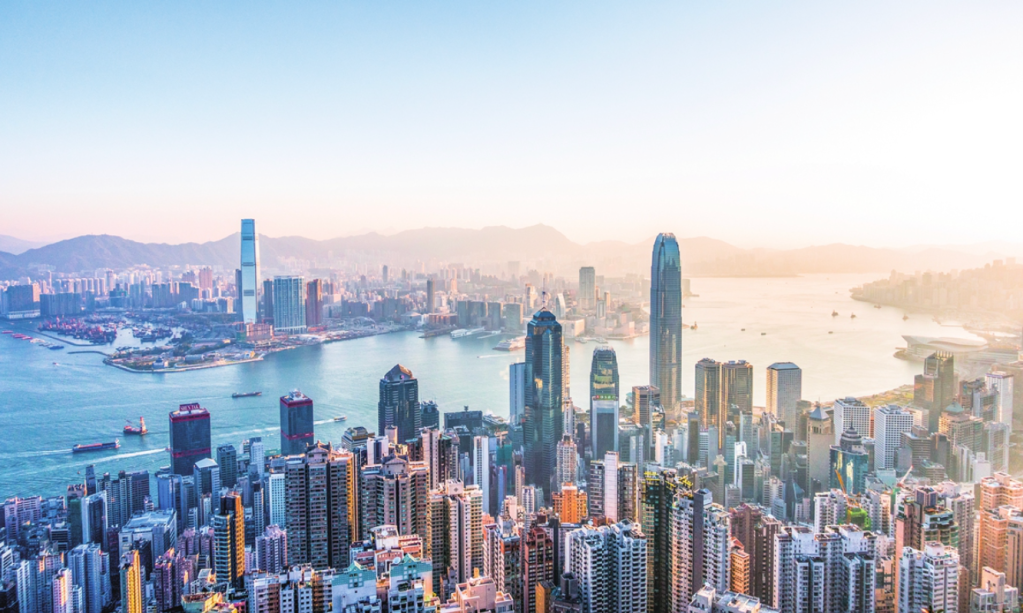
Hong Kong remained one of the clearest examples of institutional deepening in Q2 2026. Although the key announcement came in January, its significance continued to shape the second quarter. The Hong Kong Monetary Authority and the Securities and Futures Commission, through the Cross-Agency Steering Group, announced strategic priorities for 2026 to 2028 centred on strengthening the sustainability disclosure ecosystem, expanding and deepening sustainable finance markets, and strengthening external engagement. The same statement highlighted progress on sustainability assurance, the Roadmap on Sustainability Disclosure in Hong Kong, transition plan disclosure, the Hong Kong Taxonomy for Sustainable Finance Phase 2A, transition planning guidance for the banking sector, and carbon-market development. It also confirmed that the government’s roadmap envisages full adoption of ISSB Standards by large publicly accountable entities no later than 2028.
The Hong Kong Taxonomy for Sustainable Finance Phase 2A is especially notable. According to the HKMA’s January 2026 statement, Phase 2A expanded the taxonomy scope to six sectors, increased the number of economic activities from 12 to 25, introduced transition elements, and added a new environmental objective on climate change adaptation. These are not minor technical changes. They indicate that Hong Kong is trying to build a taxonomy framework more closely aligned with the practical needs of Asian transition finance, including adaptation and more nuanced treatment of economic activities.
For Q2 2026, the significance of Hong Kong’s approach lies in the combination of disclosure, taxonomy, transition planning, and market-development priorities. This is one of the strongest regional examples of sustainable finance moving beyond individual products into a more complete institutional ecosystem. Hong Kong’s model is also important because it aims to position the city as a channel for sustainable capital flows in Asia, linking international standards with regional transition opportunities.
ASEAN Climate Finance and the Fiscal Dimension
A second important Q2 theme was the growing focus on climate finance through fiscal and public-policy channels in Southeast Asia. The ASEAN Climate Finance Policy Platform 2026, published through ADB’s Southeast Asia Development Solutions platform, points to increasing regional attention to practical financing tools, including municipal green, social, and sustainable bonds for climate-resilient infrastructure. The associated platform materials also emphasise climate-resilient fiscal management and strategic responses by finance ministries to climate risk. Separately, an ASEAN 2026 post from May 2026 described climate resilience as fiscal resilience and highlighted the ASEAN Climate Finance Policy Platform as a peer-learning mechanism focused on climate-finance policy.
This is a meaningful development. It suggests that sustainable finance in Southeast Asia is increasingly being treated not only as a question for capital markets and private financial institutions, but also as a matter of fiscal policy, public investment, and state capability. That is especially important in markets where climate-resilient infrastructure, adaptation, and urban finance depend heavily on public-sector initiative and MDB support. In Q2 2026, Asia’s sustainable finance story was therefore not solely about investor disclosure or green labelling. It also involved the more foundational challenge of how finance ministries and public institutions integrate climate risk into fiscal and infrastructure planning.
ADB Continues to Push Project and Financing Pipelines
The Asian Development Bank remained central to the regional sustainable finance landscape in Q2 2026. On 3 June 2026, ADB announced a new program, Accelerating Climate Transitions through Green Finance in Southeast Asia, designed to help developing member countries mobilise financing for nationally determined contributions and long-term low-carbon and resilience objectives. A related project page shows the program as an active effort to accelerate climate project development and green finance in Southeast Asia. This is important because it reflects the continuing role of MDBs in turning broad sustainable finance goals into investable pipelines and country-level implementation support.
ADB’s role is especially important in Asia because the region’s sustainable finance agenda cannot rely on private capital markets alone. Many jurisdictions require technical assistance, policy support, project preparation, and blended or catalytic finance before larger volumes of private investment can be mobilised. Q2 2026 therefore reinforced a central regional reality: multilateral institutions remain indispensable to sustainable finance in Asia, not as marginal supporters, but as core actors in institution-building and project origination.
This point is also reflected in newer ADB work on just transition and financial-institution capacity building. ADB materials available in 2026 show ongoing efforts to build capacity for financial institutions in South and Southeast Asia and to support countries in understanding and financing just transition. Together, these initiatives suggest that the region’s sustainable finance debate is broadening beyond pure mitigation finance toward transition quality, institutional capability, and inclusive development outcomes.
Singapore and Market Innovation
Singapore remained an important regional centre for sustainable finance, although source visibility from MAS’s web interface was uneven from this environment. Even so, MAS search snippets from June 2026 indicate that the Energy Transition Acceleration Finance Partnership under Singapore’s FAST-P initiative raised US$250 million in a first close during the quarter. MAS materials also continue to present Singapore as a leading centre for green and sustainable finance, with emphasis on transition credits, taxonomy, and regulatory and developmental initiatives. In addition, MAS’s March 2026 response to feedback on transition planning guidelines for asset managers notes earlier commitments to support upskilling in sustainable finance. Taken together, these signals suggest that Singapore continues to position itself as a regional hub for transition-focused financial innovation and practical market development.
The broader significance for Q2 2026 is that Singapore’s sustainable finance model remains strongly oriented toward market-building, capacity, and transition-related innovation. Even where headline regulatory moves were less visible in the quarter than in some other jurisdictions, Singapore continued to exemplify a style of sustainable finance policy that combines regulatory credibility with ecosystem development. That remains highly relevant to the wider Asian landscape.
Summary
Taken together, the second quarter of 2026 suggests that sustainable finance in Asia is becoming more institutional, more transition-oriented, and more regionally differentiated. Japan continued to reinforce transition finance and investor-access themes. Hong Kong deepened its disclosure, taxonomy, and transition planning ecosystem. ASEAN and ADB work highlighted the fiscal, municipal, and infrastructure dimensions of climate finance. Singapore remained focused on transition-related market development and financing platforms. Across these different settings, the common theme was practical delivery rather than abstract expansion.
This is an important stage in the evolution of Asian sustainable finance. The region is moving beyond a phase in which progress was measured mainly by the adoption of broad principles or isolated green-finance products. In Q2 2026, progress was increasingly measured by the quality of taxonomies, the usability of disclosure systems, the credibility of transition pathways, and the ability of institutions to generate investable pipelines. That is a more demanding standard, but also a more meaningful one.
The wider implication is that Asia will remain central to the future of sustainable finance not only because of its scale, but because it is helping define what practical transition finance looks like in economies where growth, industrial change, infrastructure demand, and climate vulnerability are all deeply intertwined. Q2 2026 did not resolve the region’s financing challenges. But it did make clearer that the future direction of sustainable finance in Asia will depend on institutional design, transition credibility, and capital mobilisation capacity rather than on broad market rhetoric alone.

Leave a Reply